
When we are ready to explore our old anger (and other deeply moving emotions) we can learn to use those intense feelings as a teacher. In this chapter, we have the opportunity to gain awareness of these vivid and maybe even violent sensations to guide us to transformation.
CPE guides us toward right action about rage, and when we are called to do something about it the first step is to name our personal boundaries or “Mark our Territories”.
We can practice setting boundaries especially when we find ourselves stuck in old resentments, replaying tapes of grievances, and feeling like all of this no longer serves us in our personal growth and the creation of new things.
Boundaries

A boundary is a line that can mark the limit of an area, like a dividing line that can create a separation between us and something else or someplace else.
Physical boundaries can be set to help us better interact with our body, our things or our spaces. When we set energetic boundaries we can allow energy in or out. When we set boundaries with other people or ourselves we set “lines” for what we will say agree to or disagree to, when we will say yes or no.
Pushovers and People Pleasers usually do not have boundaries. To have boundaries means that we do not have to feel everything that anyone else is feeling to have compassion and understanding for others. We can show up for others without having to carry their emotional baggage for them. To worry about being nice or working to make sure everyone else is comfortable goes against our own well-being.
We cannot be our best selves without boundaries.
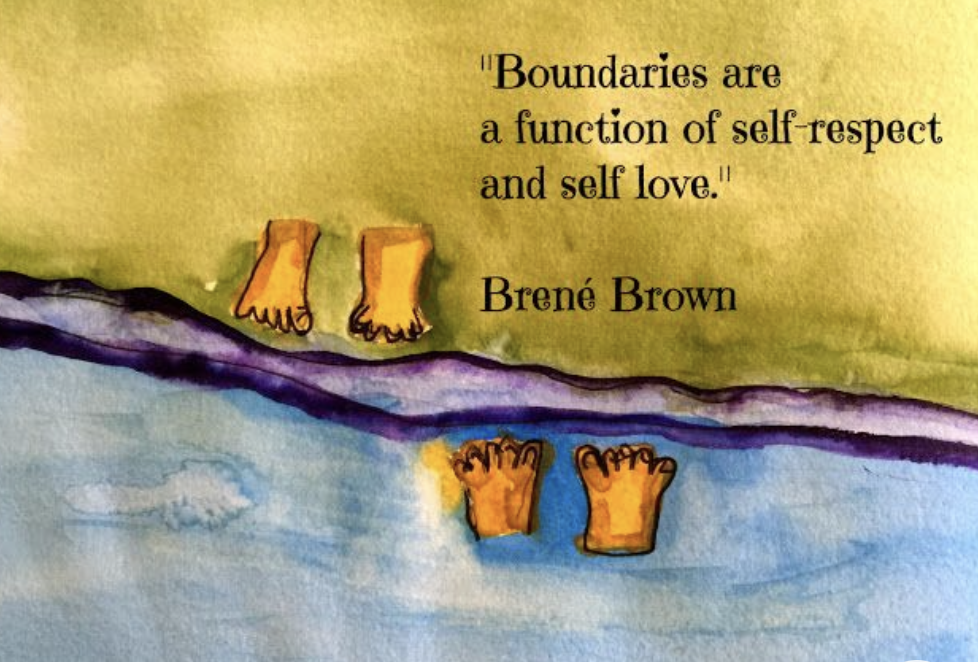
When we foster a deep respect for own well-being, things around us will shift. To communicate these boundaries to ourselves and others it can be considered an act of kindness for all. Those who do not like them will push back and claim them cruel or unfair but their interpretation does not matter. Deciding which boundaries to hold is a personal process that requires practice. We must be willing to be uncomfortable to protect our own well-being.
“Daring to set boundaries is about having the courage to love ourselves even when we risk disappointing others”
Brené Brown
Wavering will happen. Old patterns will emerge. Stick with it and being accountable to ourselves is empowering. When we send out these limits and borders, we will attract people who set their own boundaries and mutual respect will grow.
New Anger and Rage
When things come up…

New Rage can be a signpost that a boundary has been crossed or accidentally blurred. CPE guides us to identify the “cooked fire” burn rather than have it move to a “scorched earth” wildfire. Caitlin Bossart guides us to sit down and carve out time to ask the rage:
- Why is my anger showing up?
- What is it here to tell me?
- What boundary does this anger want set?
- What needs to be protected?
If we are not ready to address it calmly Bossart suggests “Bleeding off the poison” by creating a safe space to say, write, scream out all that needs to be releases and then address the interview with the fury. Once a new boundary emerges (or a revision of an old one), she suggests that we:
- Communicate verbally or in writing what happens if the boundary is broken
- Set plans for the future and ask others to keep us accountable
- Honor our NO as a complete sentence—and feel no other need to explain more
- Establish and practice energetic boundaries

Another strategy for setting energetic boundaries is to create a model of the Bubble of Light that creates a force field around ourselves. We get to decide who comes in and out of the bubble and it can help us hold space for others or protect us from toxic energy in spaces, places, and people. Caitlin mentions imagining the outside is a mirror that when negative energy comes at us, we can imagine that it morphs and bounces back positive energy to those who want to leak onto us.
Forgiveness
Dr. Estés introduces four stages of forgiveness and notes that the process begins with a personal decision to BEGIN and then CONTINUE as an act of creation. She notes that “eventually all injury has to be given sutures and be allowed to hear over into scar tissue”. Its s a four stage process:
- To FOREGO – to leave it alone and detach from it
- To FOREBEAR – to abstain from punishing and channel it away
- To FORGET – to aver from memory and refuse to dwell. LET GO
- To FORGIVE – to abandon the debt
Forgiveness is the culmination of all the foregoing, forbearing, and forgetting
Clarissa Pinkola Estés
CPE suggests the practice of cleansing using a the model of Descansos which are “symbols that mark a death”. We can take a look at the timeline of our lives and consciously mark the moments in our lives that created big and little deaths. Blog writer, Nika, shares that “Conducting your own ‘descansos’ is a way to document, honor, and grieve those individual deaths along the way – and leave them where they are meant to be left – in the past, honored, acknowledged, and on a road already taken in your life. These deaths can be wrong turns, lost opportunities, broken hearts, trauma or disappointment that you’ve experienced on your journey.” As we reflect we can look at the four steps and mark them as forgotten or forgiven.

 The Power of Story