
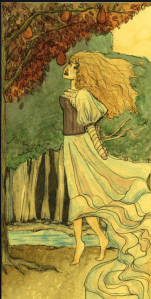
The tale of The Handless Maiden is told by Dr. Clarissa Pinkola Estés as an example of life-long endurance. In her longest chapter of the book, Women Who Run With the Wolves, she notes that this story “is not one part of our lives, but about the phases of an entire lifetime. It teaches in essence, that for women the work is to wander into the forest over and over again” (455).
The journey told in the tale is an example of our psyches and souls visiting the underworld to learn and grow. It is not easy . “When we come up out of the underworld…we may appear unchanged outwardly, but inwardly we have reclaimed a vast and womanly wildness…we are no longer tame” (455).
She analyzes the story and lays out seven stages that the maiden manages representing several descents into the underworld.
- The Bargain Without Knowing
- The Dismemberment
- The Wandering
- Finding Love in the Underworld
- The Harrowing of the Soul
- The Realm of the Wild Woman
- The Wild Bride and Bridegroom
The key archetypes are woven through the tale and are outlined in The Fourth Stage.
THE MAIDEN – represents our deep and sleepy psyche
THE SPIRIT in WHITE – acts as the guide and in archetypal psychology can be the Life/Death/Life Goddess
THE GARDENER – is the cultivator of the soul. His function is regeneration. He keeps track of the need for change because our wild lives need replacement of ideas, images, and energies.
THE KING – is the holder of knowledge in the underworld. Our old and outdated beliefs can be swapped out with new or renewed views in a woman’s life.
THE MAGE – represents the magic of feminine power. “The mage assists a woman’s ability to become whatever she wishes to portray herself …at any given moment” (420).
THE QUEEN MOTHER/CRONE – she is wise and in this tale notices the tricks of the Devil and she is the earth where the seeds of ideas can be sowed.
THE DEVIL – represents the dual nature that helps and hinders the growth and development of the soul. The devil can lure us into the underworld where we can learn and after we endure we can be reunited with tools and resources for growth.
THE PEAR – to eat the pear is “to feed our deeper creative hunger” (425).
THE MARRIAGE – the alchemy of death and birth. The cycle of life.
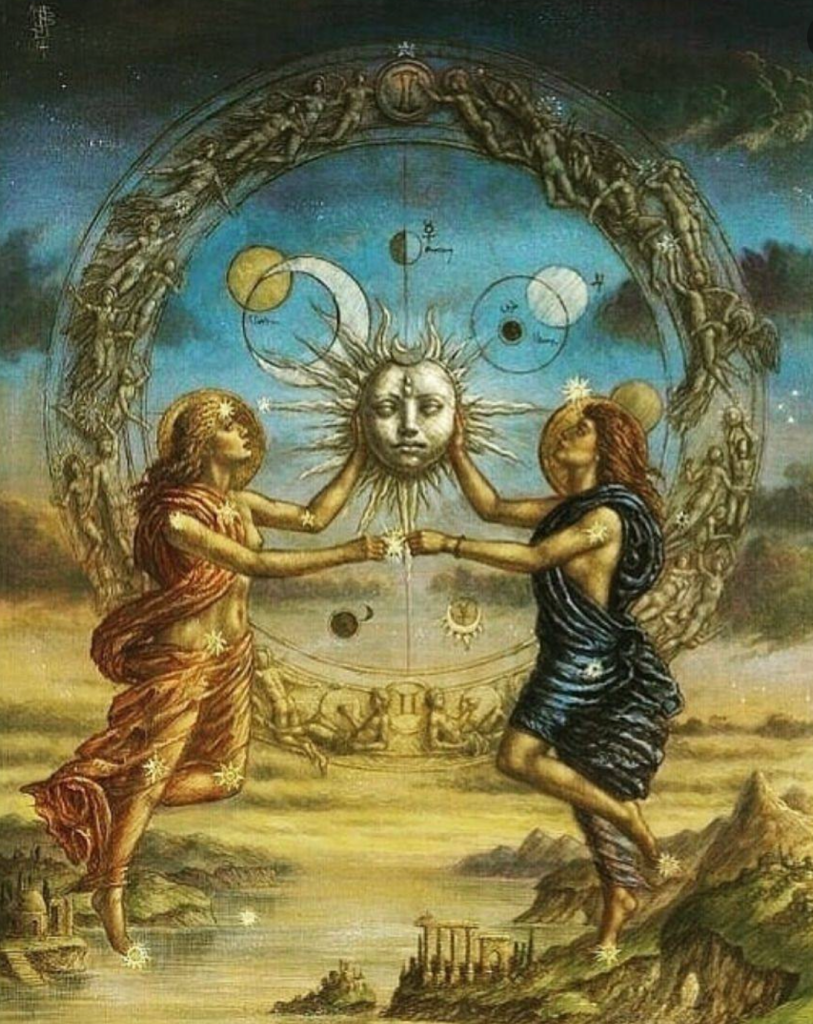
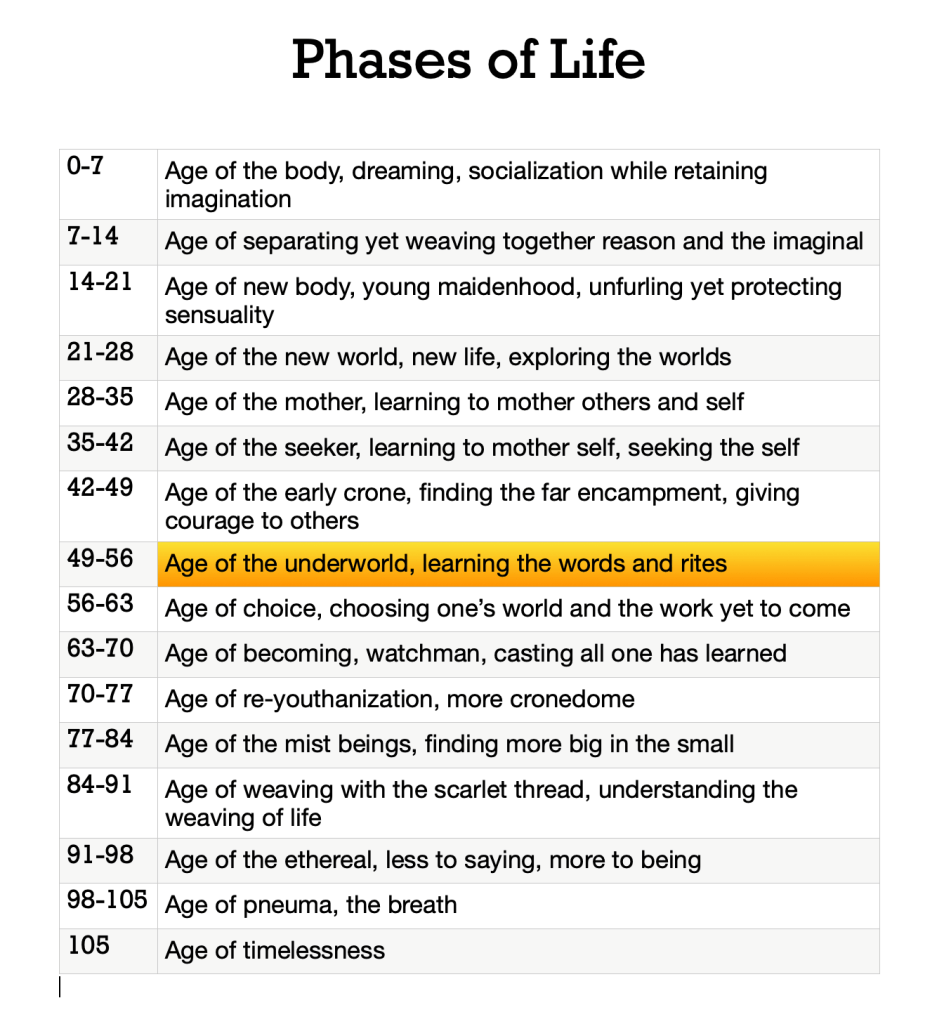
In The Sixth Stage – The Realm of the Wild Woman, CPE notes the references to the number 7, and the importance of the 7 Year Cycles in a woman’s life. These cycles or stages are adult development stepping stones. Like the phases of the moon, women experiences phases through the changing powers of her body. CPE offers metaphors where we can gain “new insights for ourselves which are both numinous and make sense right now and today” (447). They can come into our consciousness and deepen our soul, but they are not to hierarchal and the ages can vary. Once we move through the cycles, we can renew our lives for any reason and at any time.
Questions to Ponder
- How can we live in the underworld and the topside world at the same time?
- Can we come down to the underworld on our own?
- What circumstances can help with the descent?
- Is there a choice to stay or go?
- Have you listened to your instincts and intuition during this time?
…if you feel you have lost your mission, your oomph, if you feel confused, slightly off, then look for the Devil, the ambusher of the soul within your own psyche. If you cannot see, hear, catch it in the act, assume it is at work, and above all stay awake – no matter how tired you become…no matter how much you want to shut your eyes to your true work”
The Fifth Stage – The Harrowing of the Soul (ch14).

 The Power of Story