
In this chapter we can begin to understand the foundation of committed relationships of love, not as something where only pleasure is allowed and only good times- or only increase, but where the Life-Death-Life cycle is honored in whatever commitment we encounter. I would propose that this can be the obvious romantic connections, but also friendships and commitments we make to ourselves. It is about understanding there are times of closeness, connection, and plenty but there are also times where we feel farther apart or where aspects of our relationships need to be released so something new can come into being.
In Chapter 3, Vasilisa started the journey to finding the inner Wild Woman an introduced the importance of intuition as we allow ourselves to navigate the internal landscape of our psyche. Vasilisa began to tap into her inner knowing with the help of the doll that was given to her by her dying mother. As she follows the twists and turns of the forest she learns to rely on herself.
In Chapter 4, we continue discovering the Wild Woman. Manatee brought in the masculine side of ourselves and learning of our dual nature. Our instinctual male side must rely on the dog and we are made aware that distractions can take us off course. It’s our ability to discern this from that that allows us to balance our needs and wants. Our gatekeeper can see and hear what our conscious ego cannot as we integrate our dual nature and find clarity in our Wild Woman nature.
As we enter Chapter 5 and meet Skeleton Woman, we are introduced to another theme of Clarissa Pinkola Estés’s: the cycles of time as modeled in the archetype of Life/Death/Life that is: “animation, development, decline, and death that is always followed by re-animation” (127).
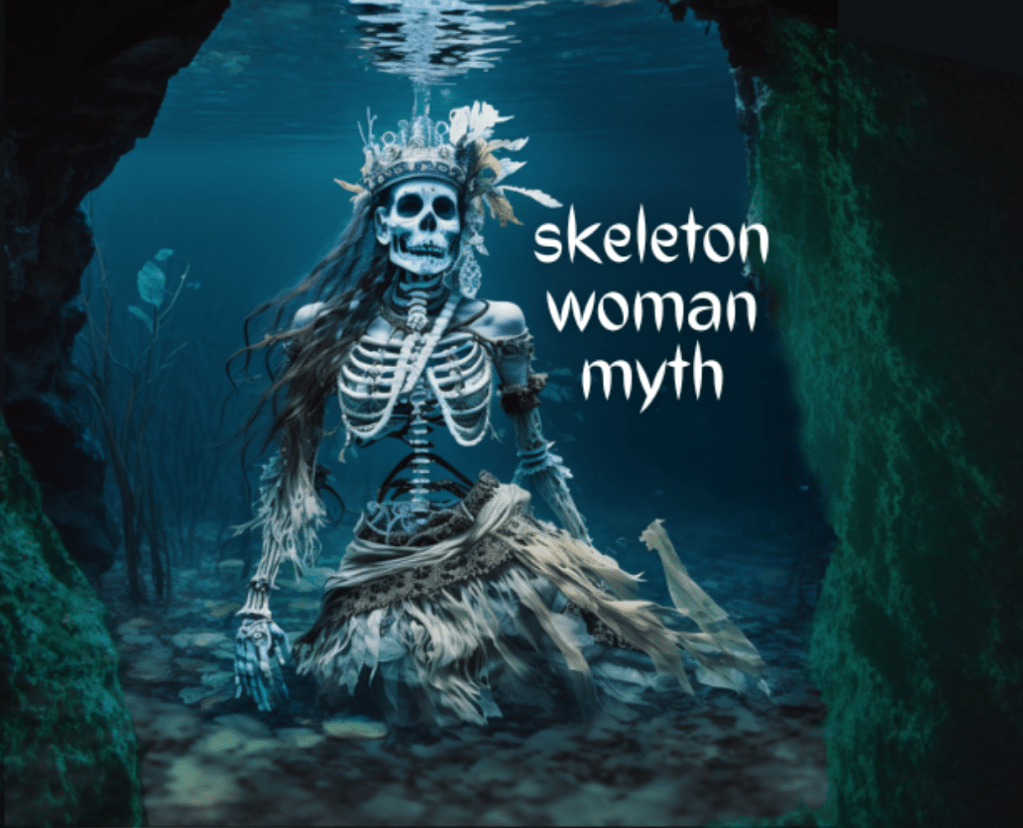
CPE tells us that Skeleton Woman has the “role of the oracle, who knows when it it time for cycles to begin and end” (128). She is the wild part of a relationship that can scare partners but for relationships to grow and endure, all of the partners must embrace the symbolism.
For a quick animated short version of the story :
CPE puts forth the First Phases and Latter Phases of Love:
- The accidental finding of treasure
- The chase and the hiding
- Untangling the skeleton
- The sleep of trust
- Giving the tear
- Heart as drum, and singing up
- Intermingling body and soul
The fisherman does not know what he has caught in his line and is afraid and runs away but while he is hiding she is caught up in his line and chasing him. Once the character gets over the fear, he/she can trust and allow vulnerability of feelings. Once the other can witness the compassion and deep connection (the tear), the skeleton is free to drink the nectar of love and grow into their fullest self and accept the love that is offered. Tears are symbols of change and can speak to the soul. “Tears not only represent feeling but are also lenses through which we gain an alternative vision, another point of view” (155). The heart is broken open. The relationship is accepted and the relationship can grow and flourish.
As the Skeleton absorbs the heart…”The story contains this promise: allow Skeleton Woman to become more palatable in your life, and she will make your life larger in return. When you free her from her tangled and misunderstood state and realize her as both teacher and lover, she becomes ally and partner” (156).
The story can show us that power originates in our psyche and can be represented by drumming or singing. In mythos, songs heal wound and are used to bring things closer. Pain can be eased and magic can enter and restore. It is said that the dead can be brought back to life through song. “So when there is song in a tale or myth, we know that the gods are being called upon to breathe their wisdom and power into the matter at hand” (158).
Finally, Skeleton Woman’s transformation is wrapped up in the archetype of Life/Death/Life where in today’s society, many enjoy the thrill of the treasure and the chase but many “cut bait and dash for the land” when things get tangled or are moving toward a deeper call for trust. CPE leaves this chapter of reminding us that this is how deep partnerships are built with “each partner transforming the other. The strength and power of each is untangled, shared” (163). One gives the heart drum and the other can give the knowledge of rhythms and feelings. She leaves us with the question and answer:
“Who knows what they will hunt together? We only know that they will be nourished to the end of their days”
(Final Line: Chapter 5)
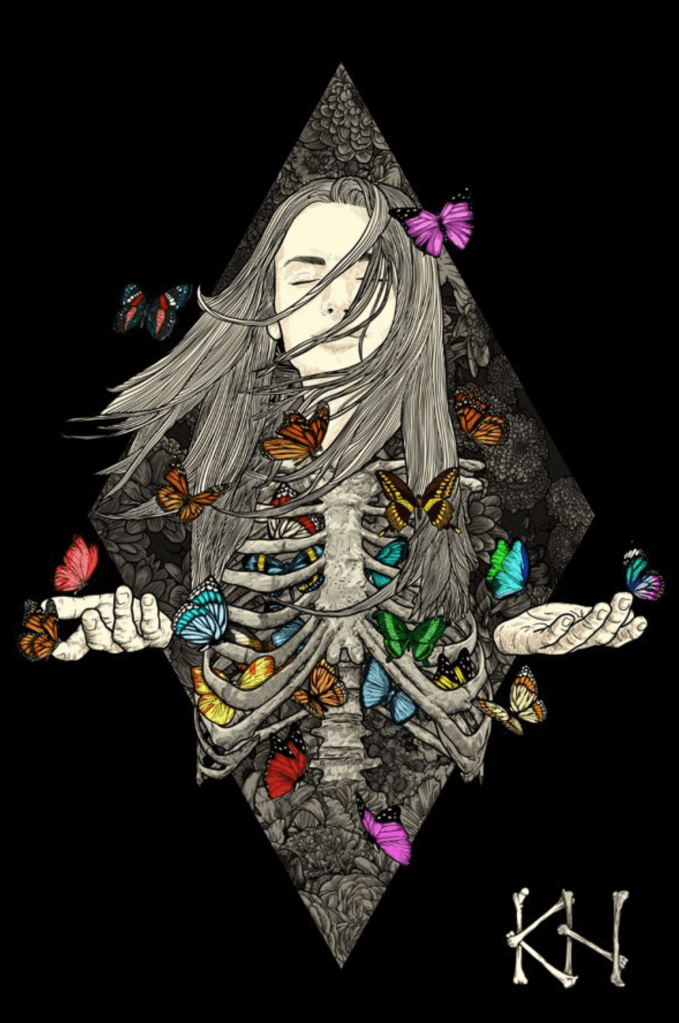
For a deeper dive, you can read this comprehensive analysis by Francois Aline Coulter, a Jungian Psychoanalyst.
 The Power of Story