
As we enter this chapter, we visit the themes of outsiders and outcasts through the tale of The Ugly Duckling. Clarrisa Pinkola Estés expands on the tale as told her by rustic storytellers in her family. She expands on the meaning of the tale by diving into the exile of the unmatched child and the various ways the archetypes of mothers can show up in our lives. The remedy for those who did not have a strong influence, or for those who had a wonderful mother relationship is to develop community relationships with the “today las madres” – the many mothers.
CPE reminds us that “the wild psyche can endure exile” (184) and “The hallmark of the wild nature is that it goes on. It perseveres” (189). We can come back to our soul when we trust enough to return but she shares that it may take “several ingredients: naked honesty, stamina, tenderness, sweetness, ventilation of rage, and humor. Combined, these make a song that calls the soul back home” (194).
Our souls need nature and creativity and CPE puts forth the following role models:
Na’ashjéii Asdzáá , Spider Woman, The Spider Grandmother
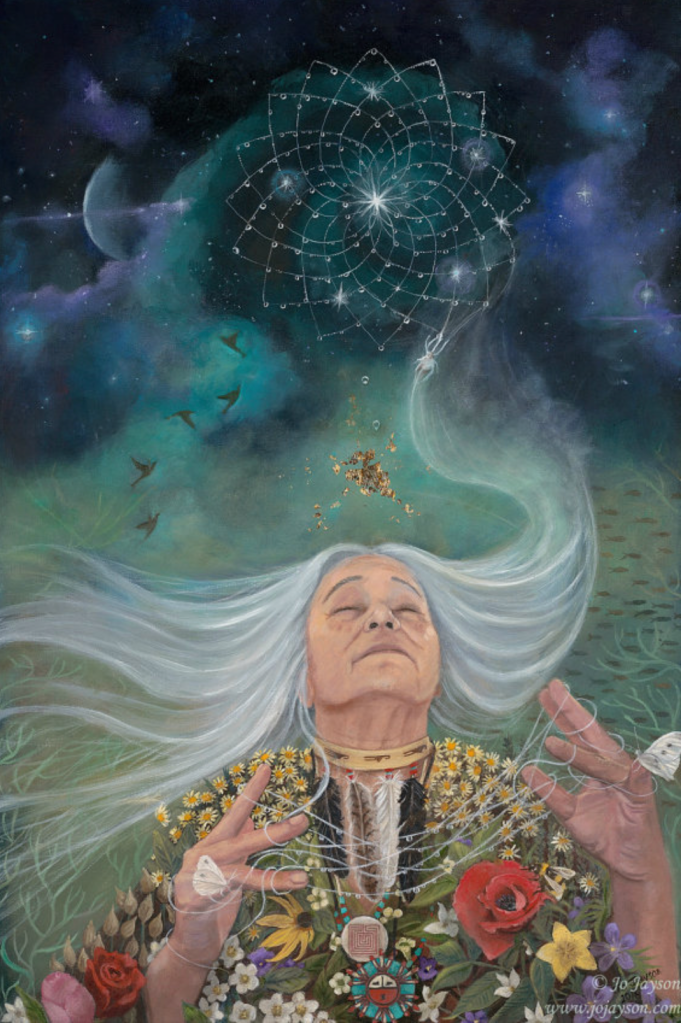
As a constant helper and protector she is a teacher of love and beauty. She is seen as a leader and a wise and “Good Spirit” who is viewed as a good ancestor that is loved and revered for her wisdom. Read more about her HERE.
The Fates – Clotho, Lachesis, and Atropos
According to the Greeks, our lives – our soul’s work – was predestined. Humans still had free will, but these three sisters of fate knew the ultimate choices and actions of each individual. In the afterlife, the life would be judged not on what deeds were done, but on how we reacted to the challenges we faced in our life. The three Fates of Greek mythology were Clotho, Lachesis, and Atropos, and each had a different role in weaving the fate of mankind. We can see these three sisters in many stories, fables, and myths since they “weave the ages of a woman’s life, tying them off as each is completed and the rest if begun. More HERE.
Diana/Artemis

She is the wolf woman, or the huntress spirit, who represent the ability to hunt, track, and call back various aspects of our psyche. The Greeks call her Artemis and the Romans named her Diana. CPE’s reminds us that she can help us to find ourselves in the wilderness and call us back to a place of belonging. More HERE.
Coatlicue
The Aztec Goddess of female self-sufficiency and is the ultimate protectoress of the female outsider and CPE notes she is the maker of babies but also the death mother who wears skulls on her skirt that sound like rain to draw moisture to the earth to guide rebirth and regeneration. Check out the video for the additional symbolism and detail of the ancient statue.
Nutrition for the Soul
As CPE concludes Chapter 6, she reminds us that our soul’s mission is not to simply to survive – but to THRIVE and grow as free creatures. She puts forth psychic macrobiotics:
- Air – Sunlight – Trees
- Words – Paper – Books
- Color – Form – Shadows – Clay
Some women want to dance and others want to lean against a tree but CPE reminds us that RITUAL “is one of the ways in which humans put their lives in perspective…Rituals call together the shades and specters in people’s lives, sorts them out, puts them to rest” (196).
ACTIVITY: Lectio Divina
A modern day version of Lectio Divina is a ritual tool that we can use with the text of a book to bring us back to Clarissa Pinkola Estés call for “Story as Medicine”. Casper ter Kuile, the author of, The Power of Ritual: Turning Everyday Practices into Soulful Practices, refers to his podcast: Harry Potter and the Sacred Text where he shows how to use Lectio Divina for anything we read. It is a very similar process to what CPE does for us in each chapter of her book.
Choose a random sentence from this chapter’s tale: “The Ugly Duckling”. It can be one that stood out to you, or like the Bibliomancy activity suggested before, you can close your eyes and randomly point to a sentence or phrase.
- Literal content: what is happening?
- Allegorical content: what is this alluding to, what is the bigger meaning?
- Personal reflection: what does this evoke in your personal experience?
- Action: what do you want to do about it?
“He had never seen creatures more beautiful than they, and he had never felt more bereft”
Finding One’s Pack: Belonging as Blessing – The Ugly Ducking (para 18).
- The Ugly Duckling is out on his own, lonely, and finds a pond where he sees a flock of birds fly over his head and they call down to him and his reply is a voice he has never heard from himself before.
- When we are alone and see a place where we wish could belong, and we get noticed, something changes.
- When I was experiencing infertility and longed to be part of the “motherhood” club, I felt ostracized and alone, and out of place and I longed to be part of that group sharing in the community of parenthood.
- There still needs to be more done to break down the stigma of infertility, miscarriage, and all aspects of female reproductive health access. It might be time to revisit some essays from grad school and submit them.
 The Power of Story