
The word “equinox” derives its name from the Latin term “eqi” which means “equal” and “nox” which means “night”.
According to the astronomical calendar, there are two equinoxes each year iwhen the day and night are approximately 12 hours each everywhere on Earth. the equinox occurs at a specific moment in time when the Sun crosses the celestial equator, the imaginary line in the sky above Earth’s Equator, from south to north. It happens twice a year in March and September. The axis of the Earth is tilted perpendicular to the Sun’s rays.
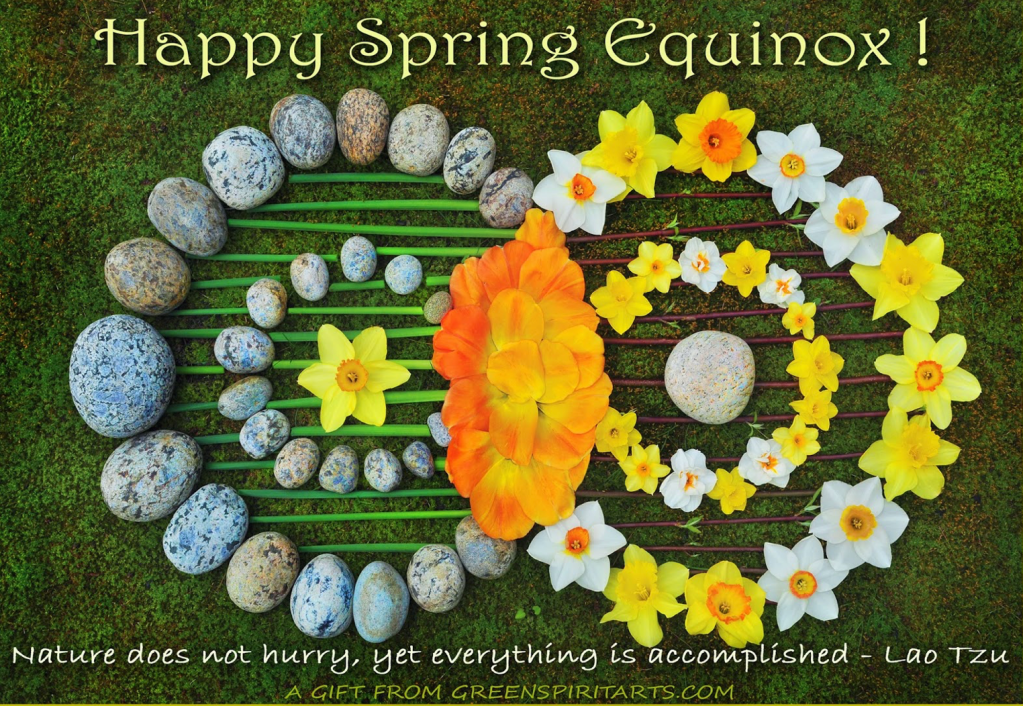
Spring Equinox celebrates the renewed life of the Earth that comes with the Spring. It is a solar festival. This turn in the seasons has been celebrated by cultures throughout history who held festivals for their gods and goddesses at this time of year. Aphrodite from Cyprus, Hathor from Egypt and Ostara of Scandinavia. The Celts continued the tradition with festivities at this time of year.
Today, Pagans continue to celebrate the coming of Spring. They attribute the changes that are going on in the world to an increase in the powers of their God and Goddess (the personifications of the great force that is at work in the world). At the time of Spring Equinox the God and the Goddess are ofter portrayed as The Green Man and Mother Earth. The Green Man is said to be born of Mother Earth in the depths of winter and to live through the rest of the year until he dies at Samhain.
Ostara or Eostre was the goddess of dawn and the spring equinox to the Anglo-saxon, Old English and Germanic speaking peoples of north west Europe. The Christian celebration of Easter has been named after this goddess.
 The Power of Story